Filesystem hierarchy standard describes directory structure and its content in Unix and Unix like operating system. It explains where files and directories should be located and what it should contain.
The Root Directory
All the directories in the Linux system comes under the root directory which is represented by a forward slash (/). Everything in your system can be found under this root directory even if they are stored in different virtual or physical devices.

Linux Directories
We have categorize the directories according to the type of file as given below:
| Directory type | Types of files stored |
| Binary directories | Contains binary or compiled source code files, eg, /bin, /sbin, etc. |
| Configuration directories | Contains configuration files of the system, eg, /etc, /boot. |
| Data directories | Stores data files, eg, /home, /root, etc. |
| Memory directories | Stores device files which doesn’t take up actual hard disk space, eg, /dev, /proc, /sys. |
| Unix System Resources | Contains sharable, read only data, eg, /usr/bin, /usr/lib, etc. |
| Variable directories | Contains larger size data, eg, /var/log, /var/cache, etc. |
| Non-standard directories | Directories which do not come under standard FHS, eg, lost+found, /run, etc. |
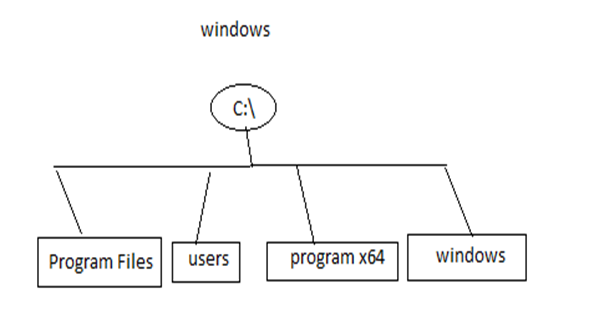
WINDOWS –
Linux –


5 Comments
free fire diamonds
May 10, 2026Honestly, This broke things down in a better way, and that made a difference. I’ll keep this bookmarked.
Olivia Hughes
August 16, 2026Cảm ơn thông tin bổ ích. Nếu bạn quan tâm du học Hàn Quốc, Letco chuyên tư vấn lộ trình, chọn trường và xin visa với tỷ lệ đậu cao. Xem chi tiết tại letco.vn.
Megan Ward
August 20, 2026Been meaning to comment for a while, and this post is spot on. Been looking around myself lately, and https://obrd.jzvl-whatsepp.com/ is the one site I actually trust. A huge range of openings, updated daily — no fluff.
Sophie Adams
August 21, 2026I really enjoyed this, very well put. There’s a careers site over at https://yjyg.careershive.shop/ that is genuinely worth a look. It aggregates openings from thousands of companies, and the handy bit is that it doesn’t bury you in ads. All the best!
Michael Brown
August 24, 2026Thanks for the write-up. I bookmarked rolepool.shop a while back and it’s worth a look too.