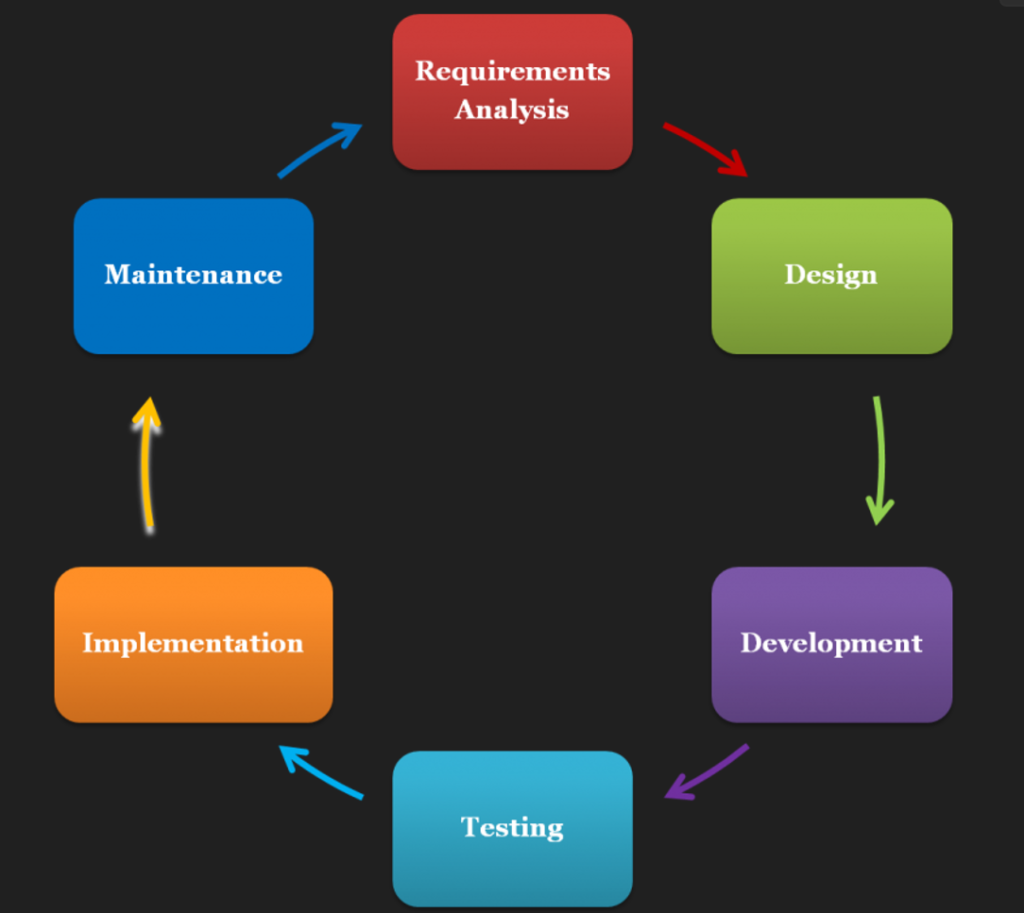
Waterfall methodology, also known as the linear sequential lifecycle model, is defined by its linear, structured approach to project management. It is made up of a series of steps that are completed in sequential order within the software development life cycle (SDLC).
It is made up of a series of steps that are completed in sequential order within the software development life cycle (SDLC).
Since its publication, variations of waterfall have emerged, but there is general consensus around the following steps within the process:
- Gathering of requirements: This stage demands upfront documentation between the development team and the client or end user. During this phase, the product features within the project plan are documented in great detail, enabling the team to determine a clear cost and timeline. After both parties align on the requirements, there is limited to no correspondence between the development team and client until the project is completed.
- Design: The design phase is comprised of two steps: logical design and physical design. In logical design, the team brainstorms possible ways to tackle the client problem. When the development team agrees on a solution, these ideas are translated into specific technical tasks, which are then distributed across the team to construct the physical design.
- Implementation: In next phase, developers start coding based on specifications that were developed in the prior steps.
- Verification: This stage tests ensures that the code functions as intended and that the requirements in the scoping document have been met. The development team checks for bugs in the code and a final validation is conducted by the client to ensure that functionality met expectations.
- Maintenance: As users onboard and use the end product, there will be a need for ongoing support as new issues arise.
Key benefits of the waterfall method
- Detailed product requirements and documentation enable new programmers to onboard quickly and easily.
- Documentation provides a clear scope to the project, enabling project managers to communicate budgets, timelines, and key milestones to interested parties.
Key challenges of the waterfall method
- Clients can find it difficult to outline all of their requirements at the beginning of the project, leading to gaps in documentation.
- Minimal customer collaboration during the development process can lead to costly changes if the product does not meet expectations.
- Testers report issues and bugs later in the process, which could have informed an alternative program architecture.